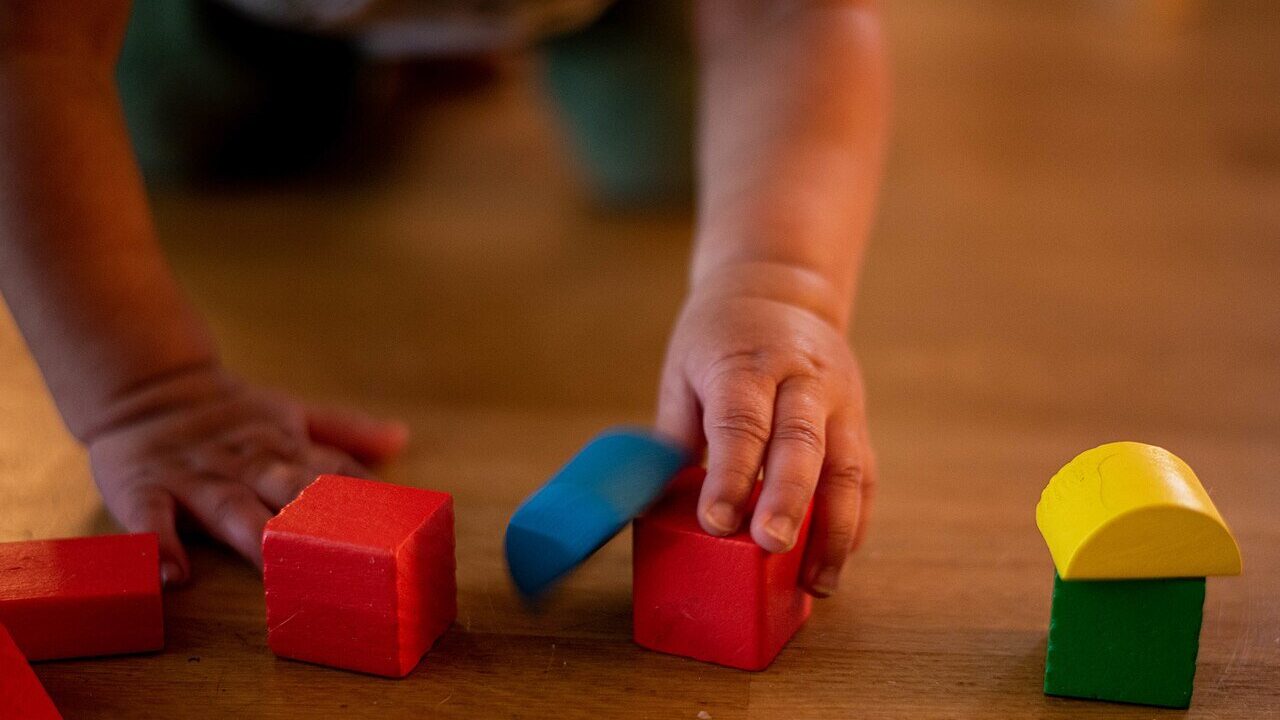
Eye-tracking measures of social attention in healthy 18-month-old toddlers were significantly associated with Griffiths-III developmental scores in a study reported this week, researchers say — a correlation between where a toddler looks and how that child scores on an established assessment of early development, reported here as the association it is and not the screening test it is sometimes tempted to become.
Social attention is a foundational behaviour. Before language, children learn the world substantially by following eyes: joint attention — looking where a caregiver looks, checking a face for reaction to something new — is the mechanism on which vocabulary, social learning and much of early cognition are built. Measuring it precisely has always been the difficulty, since toddlers do not complete questionnaires; eye-tracking converts looking into data — dwell times, shifts, responses to faces and scenes — without requiring the child to perform on demand, which is why developmental scientists prize it.
The Griffiths-III scales give the comparison its weight: a standardised, clinician-administered assessment of development across foundations of learning, language, motor and personal-social domains. An association between laboratory gaze patterns and scores on such an instrument, in healthy toddlers, suggests the tracking captures something real about developmental variation within the normal range — not merely the extremes a clinic sees. Studies of this kind are how candidate markers are born: cheap, non-invasive, repeatable measures that track a respected but labour-intensive gold standard.
The cautions decide the story’s meaning. Association is not prediction of any individual child’s future, healthy-volunteer samples do not represent every population, and eighteen months is a moment in a developmental trajectory that reorders itself constantly. No parent should read a gaze study as a grade, and no clinician will replace assessment with a camera on this evidence. What researchers can legitimately claim is narrower and valuable: a candidate signal worth testing prospectively, in larger and more diverse cohorts, against later outcomes.
Developmental science advances almost entirely by such careful narrowing. If the gaze signal survives that testing, its use would be gentle — earlier, kinder identification of children who would benefit from support, at an age when support works best. That possibility, stated at the size the evidence supports, is a good morning’s science.