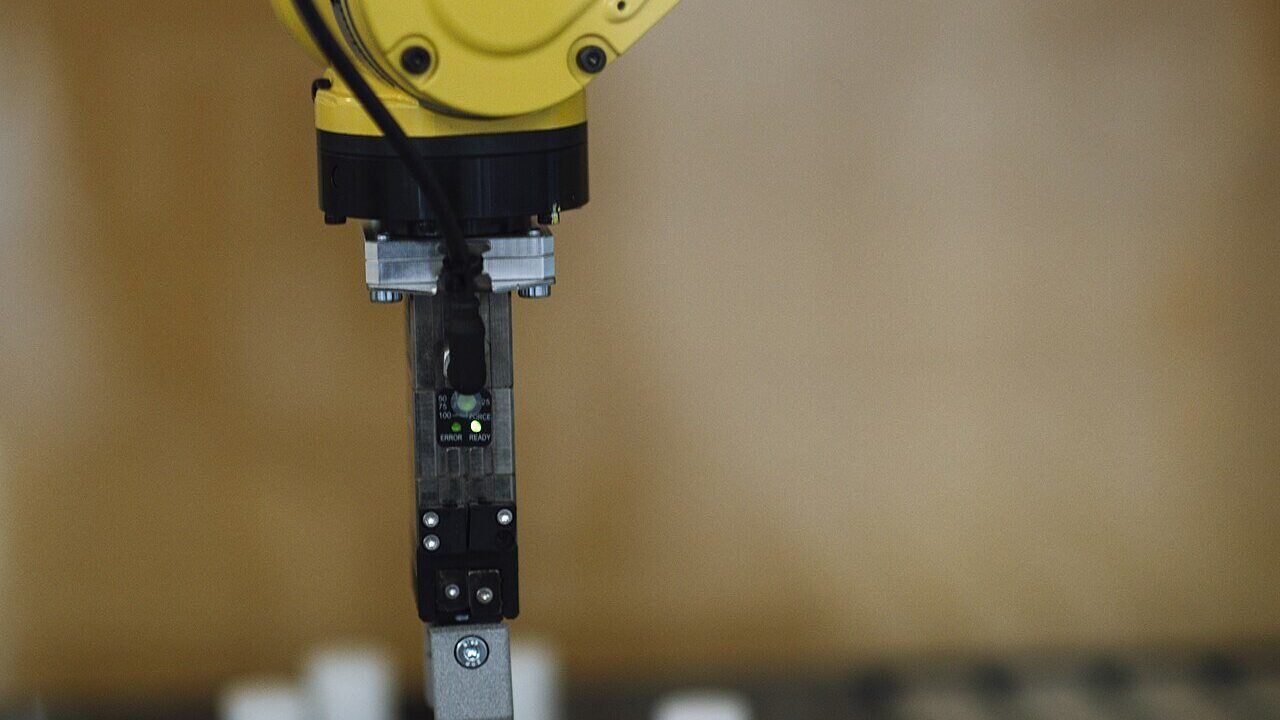
Researchers at Hefei University of Technology report a vision-based grasping pipeline for robot hands that reaches 95 per cent accuracy in cluttered scenes, combining improved object detection, MobileSAM segmentation and grasp-pose estimation to pick objects out of the visual mess that defeats most warehouse and laboratory robots.
Clutter is the correct hard problem. A robot that grasps a single object on an empty table demonstrates geometry; a robot that finds the right object among overlapping neighbours, judges what it can safely close its fingers around and ignores the rest is doing perception under real conditions. Segmentation — deciding exactly which pixels belong to the target — is where cluttered grasping usually fails, which is why the pipeline’s design centres on it rather than on a stronger arm or gripper.
The 95 per cent figure should be read as laboratories intend it: success inside the reported test conditions, with their objects, lighting, camera positions and definition of a successful grasp. The distance between that result and a deployment that runs eight hours among unfamiliar objects, damaged packaging and changing light is where robotics companies spend their real money. Nothing in the report claims otherwise, and the result is more credible for being specific about its pipeline than for the size of its number.
The direction of travel is nevertheless clear and commercially significant. Each generation of grasping research moves the boundary from structured environments — known objects, fixed bins, engineered lighting — toward the unstructured ones where most human picking still happens, in warehouses, recycling, agriculture and care. A five-point gain in clutter is worth more than the same gain on a clean table because clutter is where the remaining human jobs are.
For morning readers outside robotics, the benchmark to remember is the scene, not the score. When a system reports high accuracy among clutter, ask what the clutter contained and who arranged it. This team has published a method others can test against harder piles — which is exactly how a laboratory percentage becomes, or fails to become, a working hand.
The team’s choice of components will please engineers for a separate reason: building on a widely available segmentation model rather than a wholly bespoke stack makes the pipeline easier for other laboratories to reproduce, stress and improve. Robotics progresses fastest when a result arrives as a recipe, and this one has been published as exactly that.