On Halloween night, a protest call that began online was found in 46 cities across at least nine European countries, according to Spanish fact checker Maldita.es, and in Barcelona, it followed a pattern that has become familiar to European police: a hashtag, a meeting square, and a QR code leading to a closed messaging channel. The call did not produce the widespread looting that some feared, but it showed how quickly a protest idea can travel across borders, and how hard it is for authorities to stop it once it does.
In Barcelona, social media posts under a protest hashtag directed people to a square, with QR codes sending them to messaging channels, according to Catalonia’s interior chief. Telegram closed a Barcelona group promoting Halloween looting, but a replacement group drew more than 2,000 members, according to Spanish media reports. That cycle, closure and replacement, is the core challenge for platform policing: closing a channel does not close a network, because the network can reform, with a new name, a new link and the same members, within hours.
The 46 cities in at least nine European countries figure, reported by Maldita.es, does not mean that 46 cities saw riots. It means that calls for Halloween protests were found in 46 cities, a measure of online spread, not of street turnout. That distinction matters, because online spread and street turnout are different things: a call can be shared widely and acted on by few, or shared narrowly and acted on by many, depending on local conditions, policing and whether a community has a grievance that the call taps into.
Why Halloween, and why now
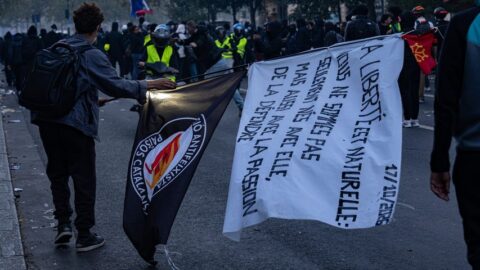
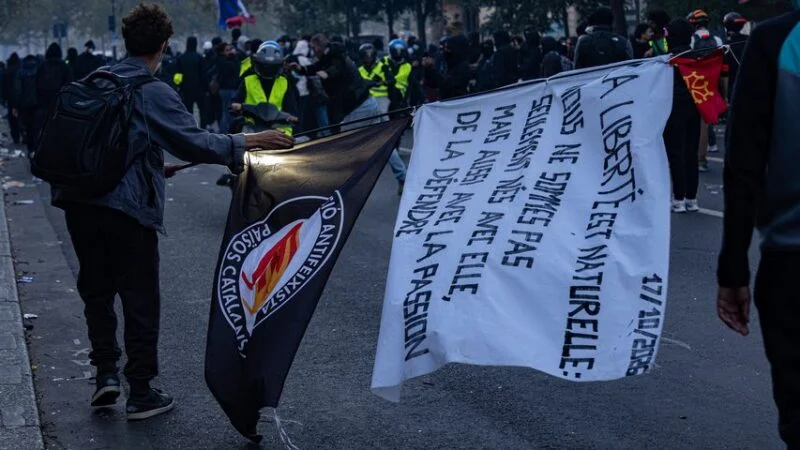
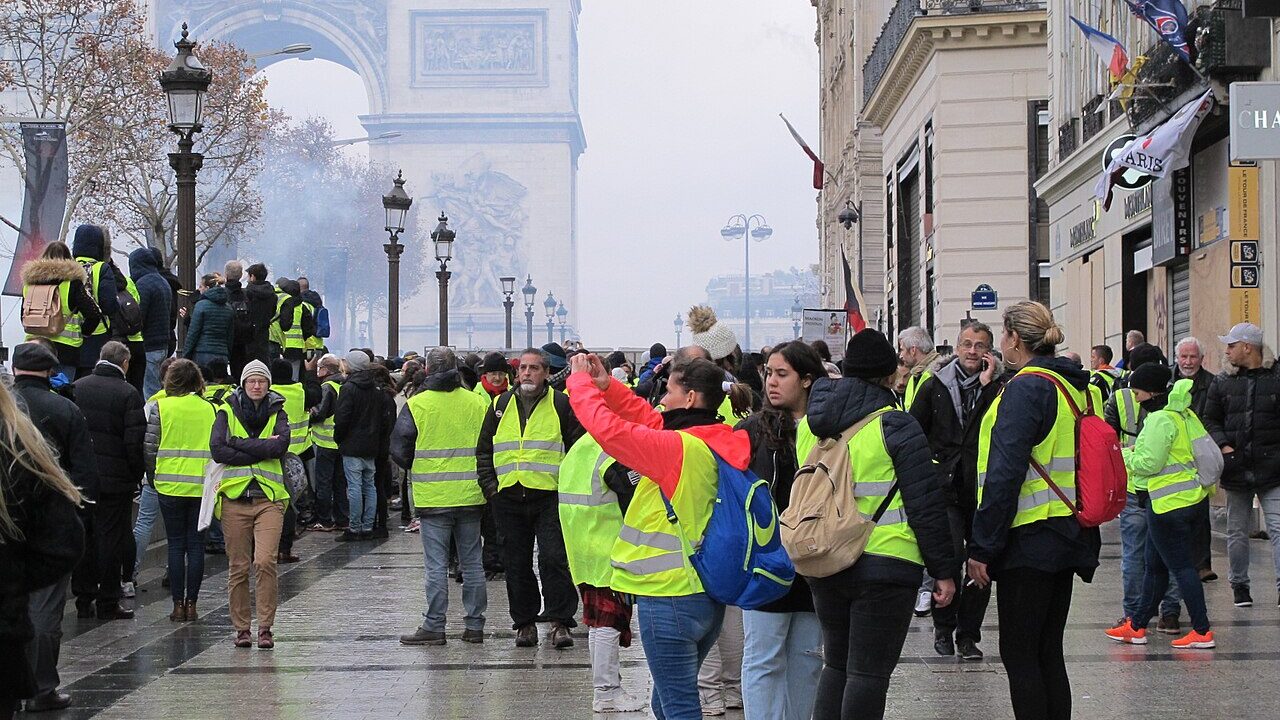
Halloween matters because it is a night when young people are already on the streets, in costumes, in groups, and after dark, which lowers the barrier to joining a gathering, whether peaceful or not. It also matters because it followed two weeks of unrest in France, where damage was estimated at over 1 billion euros, and where the Senate has since passed a bill to make people in violent crowds pay for damage. A protest call that might have been ignored in a quiet month found an audience in a month when European news was full of French streets.
Spain’s experience also shows the limits of a national response to a transnational call. A Spanish police force can close a Barcelona group, but it cannot close a call that originates elsewhere, or that is shared on a platform headquartered in another country. That is why European governments are increasingly discussing coordinated platform rules, including rapid removal of content calling for disorder, as France’s Senate has approved, and why critics warn that rapid removal, applied across borders, can sweep up lawful protest organising alongside calls for violence.
What Halloween night proved
Halloween night proved two things at once. First, that protest calls can now spread across Europe as fast as a meme, reaching 46 cities before police in any one city have finished their briefing. Second, that spread does not automatically mean disorder, because most people who see a call do not act on it, and because police, by closing groups and deploying in force, can prevent a gathering from becoming a riot, even if they cannot prevent the call from circulating.
For European governments, the lesson is that the next Halloween, or the next protest call, will be organised online before it is organised on the street, and that policing the street without policing the feed is no longer sufficient, even if policing the feed raises questions about free speech that no government has yet answered to everyone’s satisfaction.